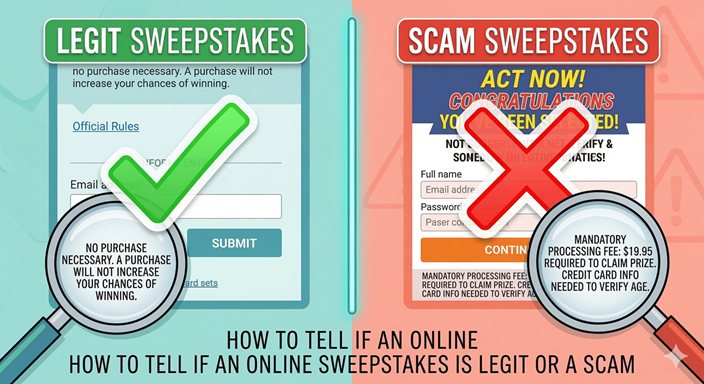
If you have ever typed "am I really going to win this?" before clicking Enter on a sweepstakes, you are not alone. Online sweepstakes have a reputation problem, and it is mostly undeserved. The short answer is yes, legitimate online sweepstakes absolutely exist, they run by the thousands every year, and real people win them every single day. The longer answer is that scams exist too, and knowing how to spot the difference takes about five minutes to learn.
This guide breaks it down so you can enter with confidence and skip anything that does not pass the test.
What Makes a Sweepstakes Legal in the United States
Real sweepstakes in the US are governed by sweepstakes law, which requires three things to be present for something to be considered gambling: a prize, consideration (payment), and chance. Legal sweepstakes remove the consideration element entirely. You cannot be required to buy something or pay to enter. This is why you always see phrases like "No Purchase Necessary" on legitimate sweepstakes.
Every legal sweepstakes must also have:
- Official rules that are publicly accessible
- A clearly stated prize description and approximate retail value
- Entry start and end dates
- Eligibility requirements (age, residency)
- A winner selection method
- A sponsor name and contact information
If any of these are missing, that is your first warning sign.
The 7 Signs a Sweepstakes Is Legitimate
1. "No Purchase Necessary" Is Clearly Stated
This phrase is not just marketing language. It is a legal requirement. Any sweepstakes that requires you to buy something, pay a fee, or provide a credit card number to enter is not a sweepstakes. It is either a lottery (which requires a license to operate) or a scam.
2. Official Rules Are Posted and Readable
Legitimate sweepstakes always link to official rules. Read them. They tell you who is sponsoring the contest, where winners will be announced, and what happens if you win. If there are no rules posted, walk away.
3. The Sponsor Is a Real, Identifiable Company
Big brands run sweepstakes constantly. Frito-Lay, Kinder, Valpak, and hundreds of other companies run them as marketing tools. A real sponsor has a real website, a physical address in the official rules, and is easy to look up. If the "sponsor" is a name you cannot find anywhere online, that is a red flag.
4. You Are Not Asked for Financial Information
No legitimate sweepstakes will ever ask for your bank account number, Social Security number, credit card, or payment of any kind to claim a prize. Ever. If someone tells you that you need to pay taxes upfront or cover shipping to receive your prize, you are looking at a scam known as an advance fee fraud.
5. You Actually Entered It
This sounds obvious, but it is important. If you receive a notification that you won a contest you do not remember entering, be skeptical. Scammers send fake "you won" notifications to millions of people hoping someone will respond. Legitimate sweepstakes contact winners through the channel you used to enter.
6. The Prize Is Proportionate to the Entry Method
A company giving away $500 gift cards through a simple email form is believable. A random website offering $50,000 cash just for visiting their page is not. Prizes that seem wildly disproportionate to the effort required are almost always fraudulent.
7. The Source Is a Trusted Directory
Using a curated sweepstakes directory like WinPrizesOnline means every listing has been reviewed before it goes live. You are not hunting through random websites hoping to avoid scams. Every sweepstakes listed here includes the sponsor, prize details, and a direct link to the official entry page.
Common Sweepstakes Scams to Know
The Advance Fee Scam
You receive an email or letter saying you have won, but you need to pay a processing fee, taxes, or courier charge before your prize can be released. Real sweepstakes sponsors handle taxes through tax forms (like a 1099) after you receive your prize. They do not collect money from winners.
The Phishing Form
A fake sweepstakes sends you to a form that collects your name, address, date of birth, and sometimes financial details. The goal is identity theft, not prize delivery. Legitimate sweepstakes collect minimal information at entry, usually just a name and email address.
The Facebook Clone Giveaway
Fake brand pages on Facebook post "giveaways" requiring you to like, share, and comment. Sometimes they even clone the look of a real brand's page. Check the page creation date, follower count, and the blue verification checkmark. When in doubt, go directly to the brand's official website to confirm the sweepstakes is real.
The "You're a Winner" Robocall
Automated calls claiming you have won a cruise, a car, or cash are almost universally scams. Hang up. Legitimate sweepstakes notify winners by mail, email, or phone from a real person, and they will give you time to verify the contest is real before asking you to do anything.
How to Protect Yourself Without Missing Real Wins
The best approach is a simple system. Use a dedicated email address for sweepstakes entries so your main inbox stays clean and you can spot legitimate winner notifications easily. Never use the same password on sweepstakes entry sites that you use for financial accounts. And always enter through the official entry page, not through forwarded emails or third-party links you cannot trace back to the brand.
Sites like our scam avoidance guide walk through this in more detail, but the core rule is simple: if something feels off, it probably is.
The Bottom Line
Online sweepstakes are legitimate, legal, and worth entering. Companies use them to build brand awareness, collect email addresses, and reward loyal customers. The rules exist, the prizes get paid out, and winners are real people. The key is knowing where to look and what to avoid. Stick to verified listings from trusted sources, read the official rules, and never pay to claim a prize.
Ready to find real sweepstakes you can enter right now? Browse the WinPrizesOnline directory, check out what is newly added today, or see which ones are ending soon so you do not miss out.